Ask a Chinese person what month it is, and you may hear more than a number. In the traditional lunar calendar, the eighth month is not simply “month eight” — it is Guìyuè (桂月), the Month of the Osmanthus. Every lunar month carries a poetic name drawn from the flowers that open, the birds that return, and the festivals that fall within it. This is the Chinese calendar as it was lived for centuries: not a grid of numbers, but a year written in blossoms.
A Calendar Written in Flowers
The traditional Chinese calendar is lunisolar: its months follow the moon, while its seasons are anchored to the sun’s position through the 24 solar terms. Within this system, each of the twelve months accumulated a stack of nicknames — some named for the flowers of the season, others for weather, festivals, or the movements of the stars. A month’s “flower name” is the one that stuck in poetry and daily speech.
When the osmanthus blooms in the eighth month, the month itself is renamed after it. When chrysanthemums take over in the ninth, that month becomes Júyuè, the Month of the Chrysanthemum. The calendar works like a slow-motion flower show, one bloom announcing the next.
A Year in Twelve Names
| Lunar month | Poetic name | Pinyin | Meaning |
|---|---|---|---|
| 1 | 正月 / 柳月 | Zhēngyuè / Liǔyuè | First month; “Willow Month,” when silver willow branches are placed in vases for the New Year |
| 2 | 杏月 | Xìngyuè | “Apricot Month,” when apricot blossoms cover the hills |
| 3 | 桃月 | Táoyuè | “Peach Month,” the month of peach blossom |
| 4 | 槐月 | Huáiyuè | “Pagoda-Tree Month,” when the fragrant white blossoms hang from the branches |
| 5 | 榴月 | Liúyuè | “Pomegranate Month,” when the scarlet pomegranate flowers blaze |
| 6 | 荷月 | Héyuè | “Lotus Month,” when lotus flowers fill the ponds |
| 7 | 巧月 | Qiǎoyuè | “Clever Month,” named for Qixi, the festival of the weaver goddess and the art of needlework |
| 8 | 桂月 | Guìyuè | “Osmanthus Month,” when the sweet osmanthus perfumes the air |
| 9 | 菊月 | Júyuè | “Chrysanthemum Month,” when the chrysanthemums bloom defiantly in the cold |
| 10 | 阳月 | Yángyuè | “Yang Month,” a mild spell of warm weather in early winter, the “little Indian summer” of the Chinese year |
| 11 | 冬月 | Dōngyuè | “Winter Month,” the deepest cold of the year |
| 12 | 腊月 | Làyuè | “Sacrificial Month,” the year-end month of rituals and preparation for the New Year |
The eighth lunar month falls around September in the Western calendar — this year, the first day of the eighth month is September 11. So when a Chinese poet writes of Guìyuè, he is writing of the very weeks when the osmanthus trees in the parks of Hangzhou, Suzhou, and Guilin release their golden scent.
The Month of the Osmanthus
Of all the names on this list, Guìyuè may be the most fragrant. The sweet osmanthus blooms in the eighth month, and its arrival is so dependable that the month simply borrows the flower’s name. Classical texts add their own layers: the Erya, China’s oldest dictionary, calls the eighth month Zhuàngyuè (壮月), the “vigorous month,” because the yin force of the year is growing strong; and because the month sits at the center of autumn, it is also Zhòngqiū (仲秋), Mid-Autumn.
Mid-Autumn — the fifteenth day of this month — is the Mid-Autumn Festival itself. For a Chinese family, the eighth month is the month of the full harvest moon, of mooncakes, and of osmanthus wine. The flower, the moon, and the festival have been one inseparable cluster of images for more than a thousand years.
Why “Gui” Is a Lucky Word
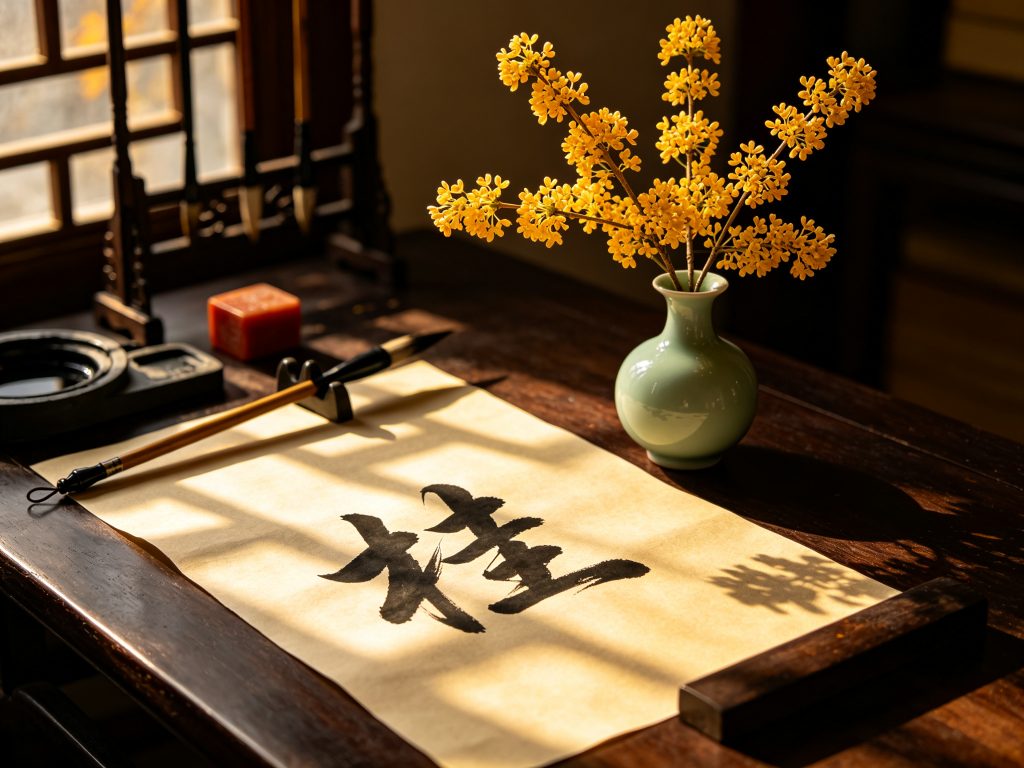
The Chinese love a good homophone, and Guìyuè has one of the best. The character for osmanthus, 桂, is pronounced exactly like the character for noble and precious, 贵. A month named for a flower is, by accident of sound, a month named for honor.
This pun runs deep in Chinese culture. In the imperial examination era, passing the civil service exams was called “plucking the osmanthus branch” (zhéguì, 折桂) — the exams were held in this very month, when the flower was in bloom. The more poetic version, “plucking the branch from the moon palace” (蟾宫折桂), tied the scholar’s triumph to the cassia tree that, according to legend, grows on the moon. To this day, the syllable guì carries the scent of good fortune: it appears in blessings for wealth, in wedding customs, and in the names of the cities that claim the osmanthus as their civic flower.
The Hidden Zodiac: Months Named by the Earthly Branches
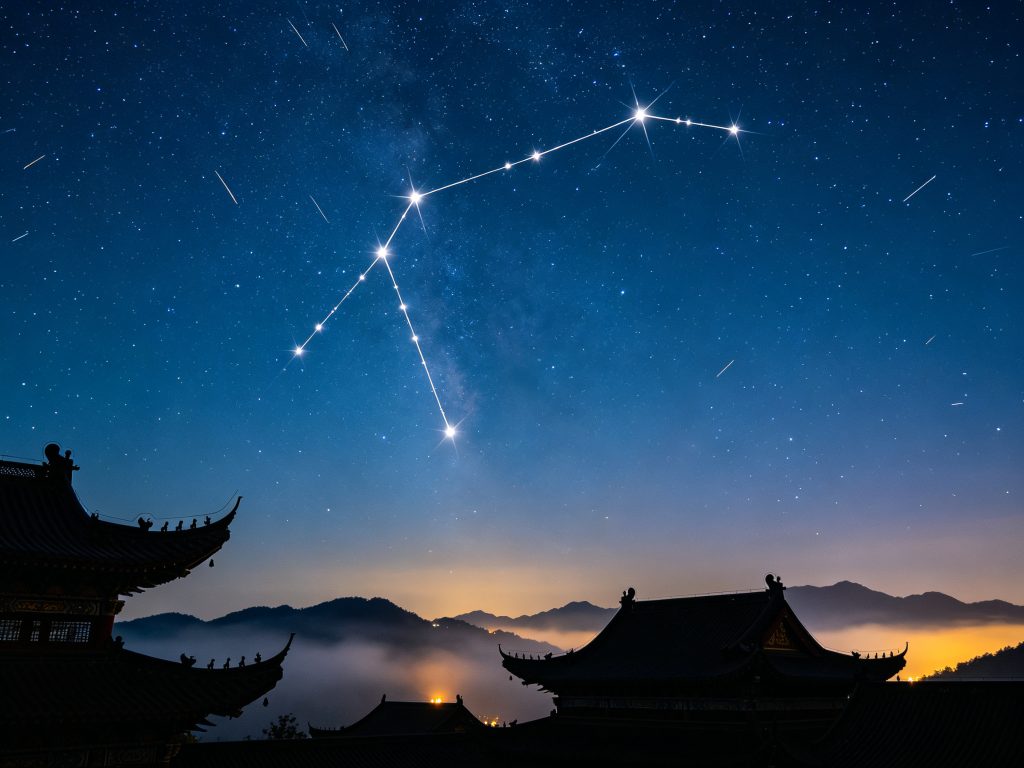
The flower names are the poets’ calendar, but the scholars had another, more systematic one. The twelve Earthly Branches (地支) — the same twelve symbols used for years and hours — were also assigned to the months. In this system the year begins with the Tiger month: the first month is “built upon” Yin (寅), the second upon Mao (卯), and so on through the twelve animals. The eighth month falls to You (酉), the Rooster, and so the eighth month is also called the Yǒu Month (酉月).
Astronomically, the month-branches were read from the handle of the Big Dipper, which appears to point to a different compass direction each month — a system the classics call yuèjiàn (月建), “the month’s establishment.” The eighth month runs from the solar term of White Dew to Cold Dew, bracketing the Autumn Equinox in the middle.
Find Your Own Birth Month
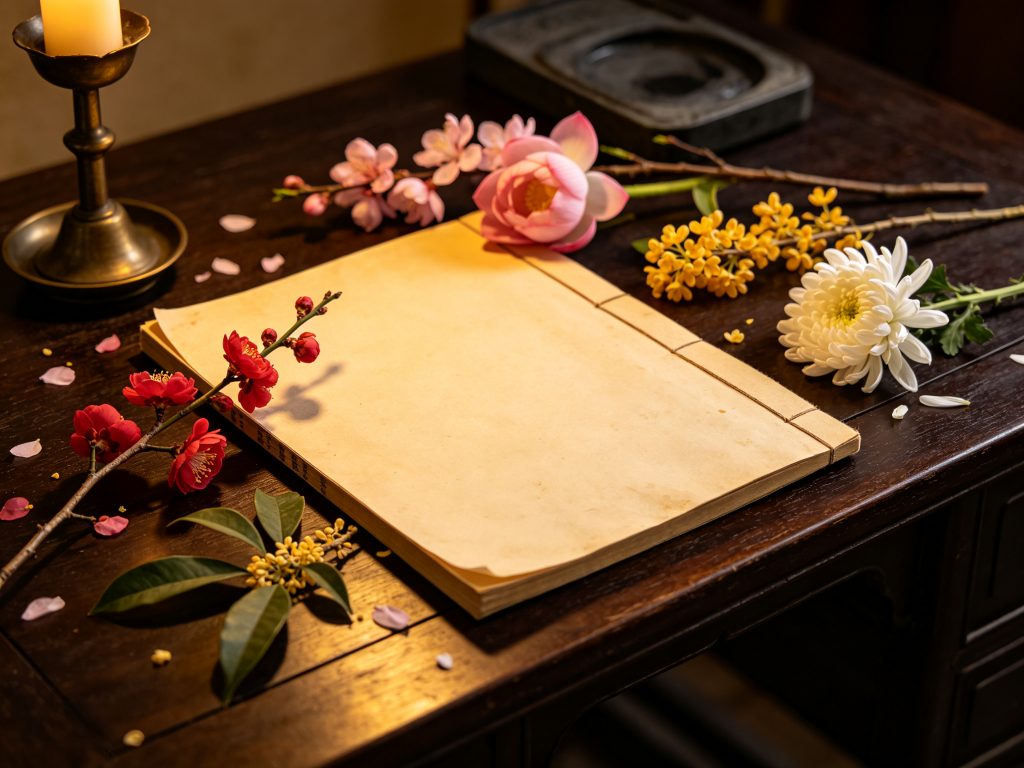
If you were born in September, there is a good chance your birthday falls in Guìyuè — the Month of the Osmanthus. People born in October are often children of Júyuè, the Month of the Chrysanthemum. The Chinese calendar gives everyone a second, floral identity: a month name to add to a birth year, a birth day, and a birth hour, each with its own animal and element. To find yours, look up the lunar date of your birthday, then read it against the table above.
If your month turns out to be Guìyuè, you are in fortunate company. In Chinese, your month says it plainly: you were born in the month of nobility, in the season of golden flowers and the full moon.
Publishing Notes
Publishing notes for the site operator — not part of the article body.
- SEO primary keywords: Chinese lunar month names; osmanthus month; Chinese calendar months; Guiyue
- Pinterest tags: #ChineseCalendar #LunarCalendar #ChineseCulture #Osmanthus #ChineseMonths #MidAutumnFestival
- Suggested images: osmanthus branches; the twelve-month flower calendar; mooncakes and full moon; Big Dipper night sky
- Internal links: Osmanthus article; Mid-Autumn Festival guide; White Dew solar term; chrysanthemums