Meta Title
Chinese Red Color Aesthetics & Cultural Symbolism | Traditional Oriental Color Aesthetic
Meta Description
Explore profound Chinese red color symbolism and traditional Chinese red culture. Learn how oriental auspicious color design applies red tones in classical gardens, home decor, art and wood intarsia for timeless oriental aesthetics.
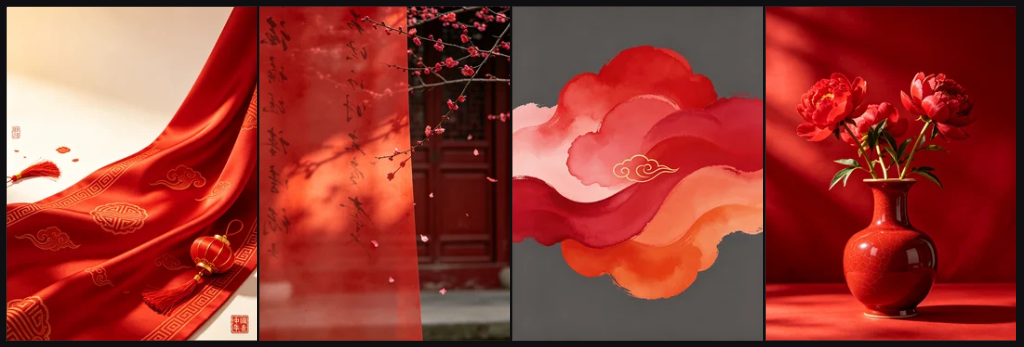
Target Keywords
Chinese red color symbolism, traditional oriental color aesthetic
Long-tail Keywords
traditional Chinese red culture, oriental auspicious color design
Introduction
Among all classic oriental hues, Chinese red stands as the most recognizable spiritual color carrier of Chinese civilization. Rooted in thousands of years of ritual, folk custom, landscape and art, Chinese red carries complete symbolic logic and unique visual charm, forming an independent traditional oriental color aesthetic system deeply loved by literati and ordinary people alike.
Chinese red color symbolism is never limited to a single bright shade; it covers a rich spectrum from cinnabar red, vermilion, brick red, wine red to soft blush red. Different red tones match distinct scenarios, delivering layered blessings and emotions. This traditional Chinese red culture permeates festivals, weddings, classical garden architecture, ink paintings, wood carving intarsia and modern oriental home decor, becoming the core element of oriental auspicious color design worldwide.
At CCPark, we extract red aesthetic elements from ancient Chinese gardens and traditional art, integrating diverse red tones into ink wall art, wood inlay craft and miniature zen ornaments. This article unpacks the origin, multi-layer symbolism, scene classification and modern decorative application of Chinese red.
1. The Origin of Chinese Red: Rooted in Ancient Worship & Life Rituals
Traditional Chinese red culture originated from primitive ancestor worship of fire, sun and blood. Ancient people regarded red as the color of life, vitality and sunlight, believing it could ward off evil spirits, dispel cold and attract good fortune.
In successive dynasties, red was solidified into official ritual color:
- Vermilion red was used on palace pillars, temple doors and official plaques, representing dignity, power and solemnity;
- Cinnabar red appeared on ritual scrolls, seal ink and painting pigments, symbolizing eternity and blessing;
- Soft folk red was adopted for paper cuttings, lanterns and wedding costumes, carrying warm mortal joy.
Unlike Western red that often stands for passion or danger, traditional oriental color aesthetic endows red with purely positive connotations, making it the universal auspicious tone across all Chinese social classes.
2. Core Cultural Symbolism of Chinese Red
2.1 Auspiciousness & Good Fortune
The most core Chinese red color symbolism. Red lanterns, red couplets, red paper cuttings fill Spring Festival scenes, conveying wishes for harvest, health and smooth daily life. In oriental auspicious color design, red is always arranged as visual focal points to inject positive energy into any space.
2.2 Joy & Marriage Bliss
Red wedding gowns, red gift boxes, red silk ribbons define Chinese marriage customs. Red symbolizes perfect love, reunion and a harmonious family, a vital part of traditional Chinese red culture passed down generation by generation.
2.3 Vitality & Life Force
Red links to sunrise, blooming peonies, flame and spring growth. Gentle blush red and peach red are widely used in garden flower painting and micro landscape ornaments, highlighting the lively vitality of oriental natural aesthetics.
2.4 Protection & Blessing
Ancient people painted door frames and window edges with vermilion to block bad luck. Even in classical Suzhou gardens, small red decorative details (red lanterns, red seal stamps on paintings) are subtly placed to bring peace to the courtyard.
2.5 Prosperity & Wealth
Deep wine red and brick red stand for thriving business and abundant fortune. These low-saturation red tones are popular in modern study, tea room and entrance decor, balancing luxury and quiet oriental temperament.
3. Classic Red Tone Classification & Oriental Scenario Matching
Traditional oriental color aesthetic divides Chinese red into multiple exclusive shades, each with fixed applicable scenes in architecture, art and decor:
- Vermilion Red (Zhu Hong) Bright, dignified scarlet; used for ancient building doors, pavilion pillars, horizontal plaques, temple structures. Widely reflected in Suzhou garden architectural line art and large decorative canvas paintings.
- Cinnabar Red (Dan Sha) Matte medium red, used for traditional Chinese painting pigments, artist seals, wood carving accents, intarsia color blocks. Ideal for small detail embellishment without overwhelming the whole picture.
- Peach / Blush Red (Tao Hong) Soft light red for plum blossoms, peach flower patterns, miniature animal ornaments; fits children’s room decor and gentle zen micro landscapes.
- Wine Red / Brick Red (Zang Hong) Low-saturation muted red, popular in modern wabi-sabi and Japandi home styling; matches grey stone, log and ink wash tones perfectly.
- Scarlet Festival Red (Xi Hong) Vivid saturated red for Spring Festival paper cuttings, lantern motifs, festive wall art; strong visual impact for holiday decorative collections.
4. Chinese Red Application in Classical Chinese Garden Aesthetics
Classical Jiangnan gardens follow restrained oriental auspicious color design logic — they never flood spaces with heavy red, but use red as subtle accent points against white walls, grey tiles and dark wood:
- Vermilion wooden pavilion pillars and corridor lattice frames contrast with plain white plaster walls, forming iconic garden visual layers;
- Small red lanterns hang under flying eaves, adding warm festive touch to quiet stone-and-water landscapes;
- Red seal stamps on garden calligraphy and painting scrolls inject vivid red focal points into monochrome ink wash scenes;
- Red plum blossom, camellia and maple tree elements are planted as seasonal red scenery, balancing neutral stone and wood tones year-round.
This restrained usage fully embodies traditional oriental color aesthetic: red as the spirit, neutral grey, white and wood as the background, achieving elegant, not gaudy visual harmony.
5. Modern Decorative Application of Chinese Red Aesthetics
Today, traditional Chinese red culture has crossed regional boundaries and become a beloved design element for Western slow-living and zen-style home owners. CCPark integrates red symbolism into three core decorative categories:
5.1 Ink Wash Wall Art
Minimal red accents: single red plum blossom branches, red seal details, vermilion pavilion pillars against misty grey mountain backgrounds. Low saturation red avoids tackiness, matching minimalist living rooms and tea spaces.
5.2 Wood Intarsia & Sculpture Ornaments
Use red timber such as Padauk and Bloodwood to create red color blocks for fox, panda, penguin and garden architecture intarsia patterns. Natural wood red texture replaces artificial paint, retaining handcrafted texture while delivering oriental auspicious meaning.
5.3 Miniature Zen Micro Landscapes
Tiny red wooden lantern ornaments, red plum stone carvings and blush pink animal figurines serve as dotted decorations on coffee tables, echoing the core concept of oriental auspicious color design without occupying too much visual weight.
5.4 Villa & Courtyard Landscape
Modern new Chinese courtyards adopt vermilion lattice windows, red wooden moon gate frames and wine-red outdoor furnishings, inheriting classical garden red layout logic and adapting to global wabi-sabi trends.
6. The Unique Charm of Chinese Red in Global Color Aesthetics
Most Western color systems treat red as an intense, dramatic color, while traditional oriental color aesthetic redefines red with restraint, subtlety and spiritual blessing. Muted red wood grain, faint blush floral tones and tiny vermilion architectural accents create a calm, healing atmosphere that perfectly fits modern slow-living demand.
Chinese red color symbolism also carries story and cultural depth, making red-themed artworks and wood crafts far more distinctive than ordinary neutral decor. For overseas collectors and interior designers, elements of traditional Chinese red culture bring exclusive oriental cultural connotation to residential and commercial spaces.
Conclusion
Chinese red is far more than a single color — it is a complete cultural system carrying thousands of years of Chinese ritual, folk custom and literati aesthetics. Rich Chinese red color symbolism covers auspiciousness, joy, vitality and protection, forming the core of traditional oriental color aesthetic.
Through flexible oriental auspicious color design, Chinese red is subtly integrated into classical garden architecture, ink painting, wood intarsia sculpture and modern home decor. From bright vermilion ancient building pillars to soft blush flower inlays, traditional Chinese red culture continues to deliver quiet positive oriental charm to global modern interior and landscape design.
Keyword Recap
Target Keywords: Chinese red color symbolism, traditional oriental color aesthetic
Long-tail Keywords: traditional Chinese red culture, oriental auspicious color design